The Route, the Timeline, and the Neighborhoods About to Be Transformed
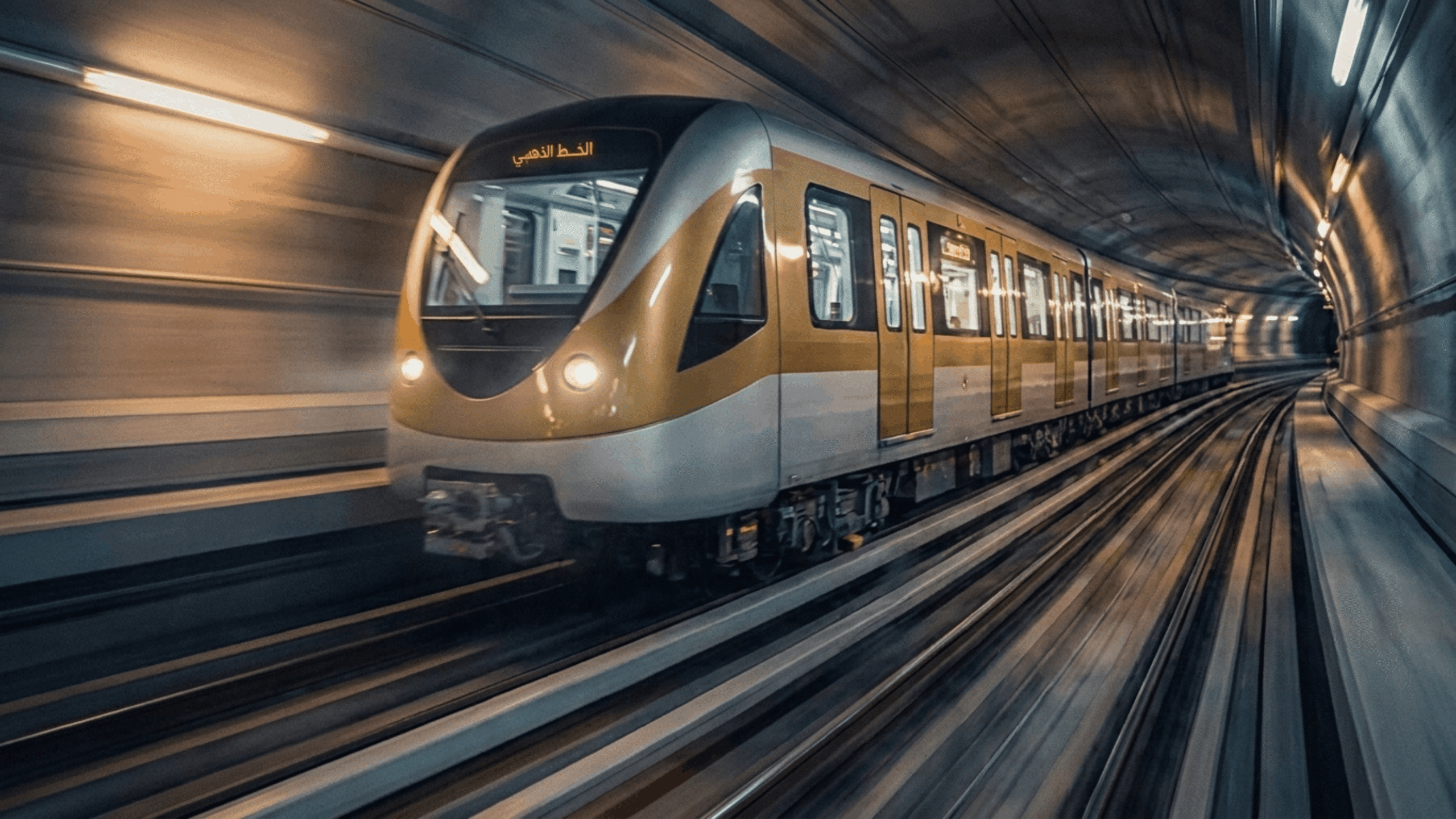
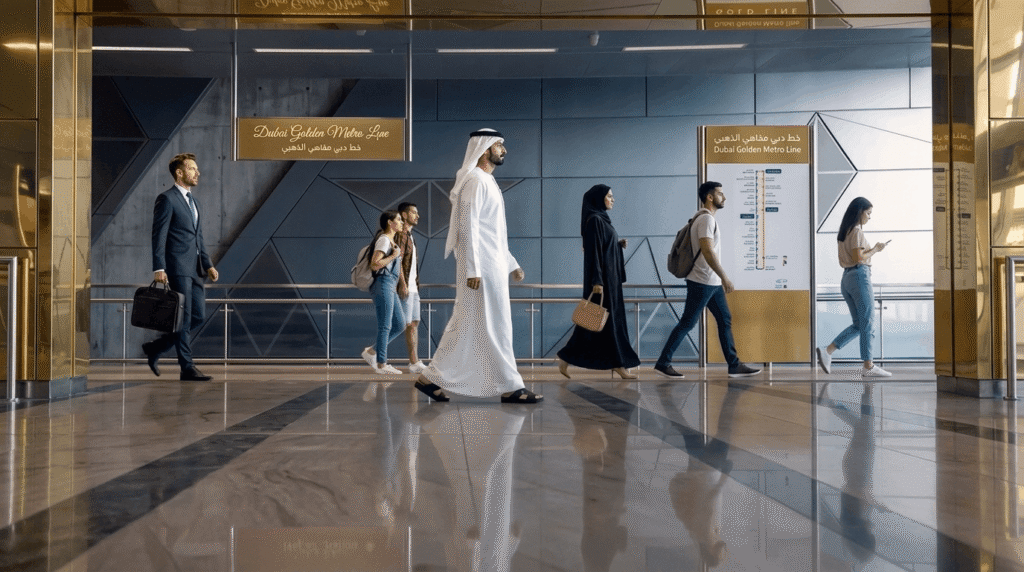
Dubai is moving the next major expansion of its metro network from the drawing board to live construction. The Gold Line a new corridor stitching together the eastern and southeastern halves of the city is on track to be operational before the end of the decade, with station footprints, alignment work, and procurement milestones already taking shape on the ground. The route threads from Dubai International Airport through some of the most populated and historically transit-starved residential corridors in the emirate.
For property owners, investors, and anyone watching the Dubai market, this is the single biggest infrastructure event of the cycle. Metro corridors in this city do not behave like metro corridors elsewhere. They reprice neighborhoods. They turn forgotten suburbs into commuter hubs. They take “too far” off the map. The Red Line did it in 2009. Route 2020 did it again at the back end of the last decade. The Gold Line is queued up to do it for a third time and the window to position ahead of the move is open right now.
Here is what the Gold Line actually is, the timeline that matters, the precedent to anchor your expectations, and the specific neighborhoods I believe will be redrawn by 2032.
What the Gold Line Is
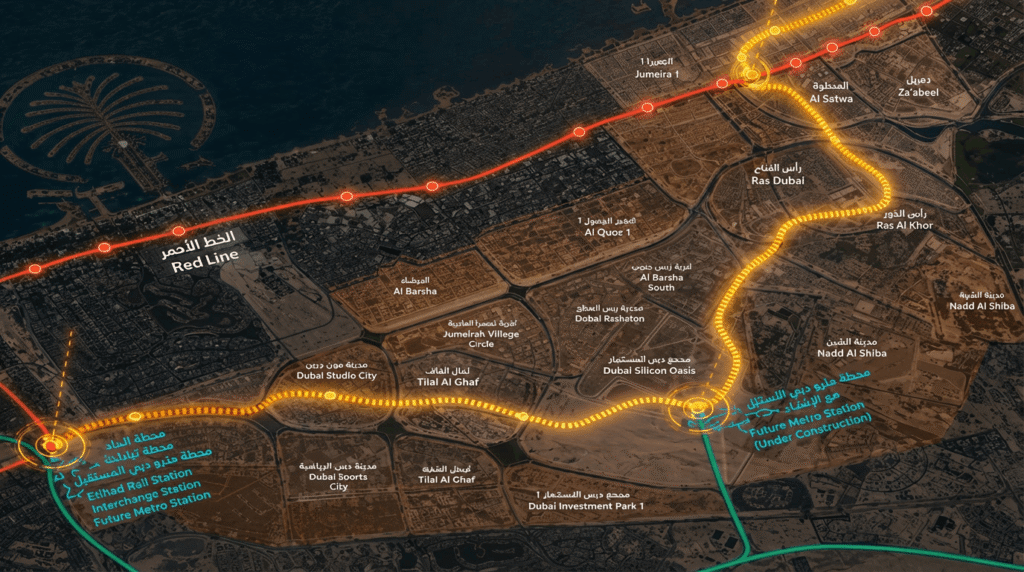
The Gold Line is the next major expansion of the Dubai Metro network, designed to connect the eastern and southeastern population centers of the city to the existing Red and Green Lines. The route, broadly, threads through Dubai International Airport on one end and reaches deep into the residential and educational corridors of southeast Dubai on the other with planned interchange points that turn previously car-dependent neighborhoods into integrated transit zones.
The published timeline puts the line on track to be operational by the end of the decade, with construction milestones already visible. That gives us a roughly seven-year window from now to full stabilization the same shape of curve we saw with Red Line and Route 2020, just compressed because the city has learned how to absorb a new line faster.
Here’s the part most people miss: the price moves don’t happen on opening day. They happen in three distinct waves and we’re standing at the start of the first one right now.
The Precedent: What the Red Line and Route 2020 Already Showed Us
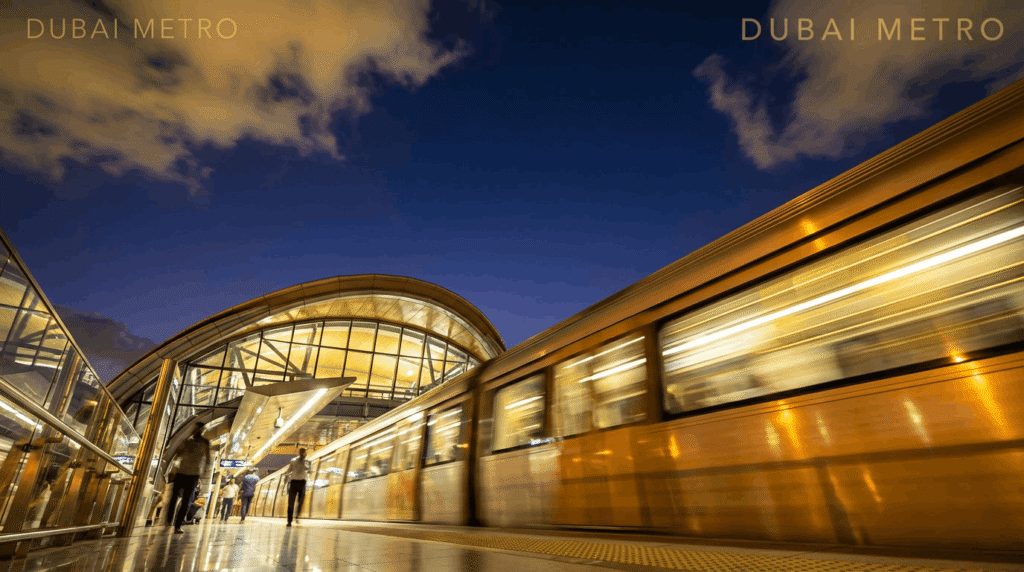
Anyone discounting the impact of a new metro line in Dubai is ignoring two cycles of evidence. The Red Line, opened in 2009, was dismissed at launch as a vanity project for a “car city.” Within a decade, buildings within a 7–10 minute walk of a station were outperforming comparable buildings 15 minutes away by 18% to 35% in capital appreciation, with materially higher rental yields driven by tenants willing to pay a premium for the daily commute math. JLT, Dubai Marina, Business Bay, and the Mall of the Emirates corridor all owe a meaningful share of their re-rating to that single line.
Route 2020 the southwest extension that opened ahead of Expo repeated the playbook on a faster clock. Discovery Gardens, Al Furjan, and The Gardens were called “too far” by retail buyers in 2017. By 2024 the same areas were posting double-digit annual appreciation post-handover. The pattern is consistent: the line is announced, the catchment re-rates over a 5–7 year window, and within 18 months of opening the secondary market has already absorbed most of the upside.
A station doesn’t just move people. It moves prices. The first wave prices in the rumor. The second wave prices in the line. The third wave prices in the lifestyle. Most retail investors arrive for the third wave and wonder why returns feel thin.
The Gold Line will follow the same shape of curve. The only real question is whether you position before the second wave or after.
The Areas That Will Be Redrawn
Based on the route corridors, the interchange logic, and the catchment math from the previous two lines, here are the neighborhoods I believe will see the most pronounced re-rating between now and 2032.
1. Mirdif
Mirdif has been Dubai’s great “sleeping giant” for fifteen years, family-friendly, villa-heavy, well-priced, but historically penalized for being metro-disconnected. The Gold Line breaks that constraint. Once Mirdif residents can step on a train and reach DXB, Downtown, or the Marina without driving Sheikh Mohammed Bin Zayed Road, the entire affordability thesis of the area gets rewritten. Townhouses and ground-floor retail near the projected station radius are the cleanest play.
2. Al Warqa
Al Warqa shares Mirdif’s DNA, mature, family-oriented, undervalued relative to its land area, but with newer inventory and a slightly younger tenant profile. A metro stop here is the kind of catalyst that takes Al Warqa from “great if you have two cars” to “obvious choice for a working couple with one car.” Watch the older villa stock; replacement-cost arbitrage gets very interesting when transit removes the commute penalty.
3. International City and Dragon Mart Corridor
International City has been the cheapest entry point into Dubai property for over a decade, with rental yields that often look too good to be true. The catch was always location and stigma. The Gold Line solves the location problem and, with it, accelerates the stigma fade. Combined with the ongoing Dragon Mart expansion and the Phase 2/3 master-plan upgrades, this is the corridor with the highest yield-on-entry potential I see anywhere in the city right now.
4. Dubai Silicon Oasis (DSO)
DSO is already a self-contained tech and residential cluster, but it’s underweight on lifestyle infrastructure compared to its population. A metro link will pull restaurants, retail, and Grade-A office demand toward it almost automatically, the same pattern we saw at Internet City and Media City after the Red Line. The smart play here isn’t residential. It’s mixed-use and serviced apartment plays within walking distance of the planned station footprint.
5. Academic City
Forty-thousand-plus students. Faculty. Visiting researchers. A captive rental market that has been chronically under-supplied with quality housing because the area has felt “far.” Add a metro link and Academic City stops being “where the universities are” and starts being “where young professionals live cheaply and commute fast.” Studio and one-bed off-plan, near the projected station, is the textbook play.
6. Dubai Creek Harbour
DCH has been waiting for two things: the tower, and a transit connection that doesn’t depend on Ras Al Khor Road. The Gold Line, by linking DCH to the rest of the network, completes the thesis Emaar has been selling for years. Inventory here is going to absorb faster than most people expect once the line’s timeline becomes concrete in buyers’ minds.
The 7-Year Window: How I’d Play It
If history repeats and on Dubai infrastructure plays, it tends to, here’s the rough shape of the curve I’m planning around:
- 2026 — Off-plan window. Developer payment plans are still generous, station footprints are still abstract on the map, and “metro premium” hasn’t fully priced in. This is the asymmetric-return phase.
- 2029 — Handover and line opening. The first wave of physical units delivers; the line begins operating; secondary market re-rating begins.
- 2032 — Mid-cycle stabilization. Rental yields find their new equilibrium; mature investors start exiting first-wave positions to buy the next infrastructure story.
- 2035 — Full maturity. The corridor is no longer “the Gold Line area.” It’s just “where people live and work,” the way nobody calls Dubai Marina “the Red Line area” anymore.
The investors who win on the Gold Line will not be the smartest. They will be the earliest with the most patience. Off-plan in 2026, hold through 2032, and the line does the work for you.
What I’m Telling Clients to Avoid
Three traps tend to catch people on infrastructure plays, and the Gold Line will be no exception:
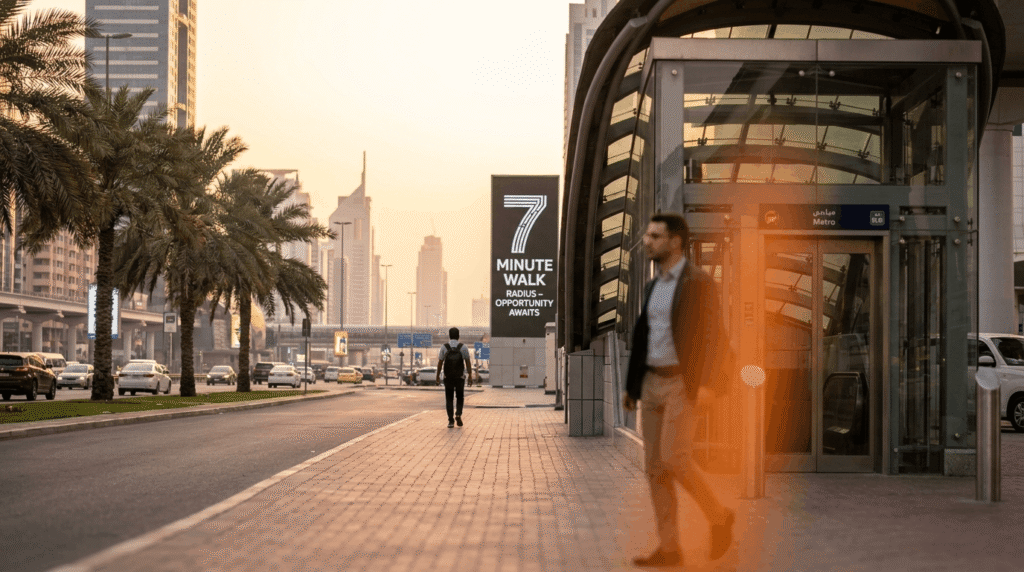
- Buying “near the metro” when you’re actually a 17-minute walk away. The catchment that gets re-rated is roughly 7–10 minutes on foot, not 15+. Anything beyond that captures only a fraction of the uplift.
- Chasing the headline neighborhoods (DCH, DSO) and ignoring the boring ones (Mirdif, Al Warqa). The biggest percentage moves almost always happen in the areas that were previously underrated, not in the ones that were already on the map.
- Waiting for “more information.” The information you’re waiting for will arrive in the form of a price already moved. The Red Line and Route 2020 both proved this. The Gold Line will too.
The Bottom Line
Dubai has done this twice before. The Red Line redrew the western waterfront. Route 2020 redrew the southwest. The Gold Line is queued up to do the same thing for the southeast, for Mirdif, Al Warqa, International City, Dubai Silicon Oasis, Academic City, and Dubai Creek Harbour. The infrastructure is already moving. The capital that will follow is the part still up for grabs.
The window to position yourself ahead of the move is open right now, and based on every cycle I’ve seen, it will close faster than people expect. If you’re trying to think through what this means for your portfolio, whether you’re a first-time buyer, a landlord with existing units in the corridor, or an investor sizing up a larger off-plan position, I’d be glad to walk through the math with you directly.
Work With Me
I help individuals and family offices build long-horizon Dubai property positions around infrastructure catalysts like the Gold Line. If you’d like a one-on-one conversation about where you should be looking right now, here’s the best way to reach me:
And if you found this useful, share it with someone who is thinking about Dubai property right now. The next seven years are going to separate the people who acted from the people who watched.