Sheikh Hamdan has approved the most ambitious urban transformation in Dubai’s history. From walkable super-blocks to 6,500 km of pedestrian pathways, this is your essential guide to the areas, timelines, and investment opportunities reshaping the emirate.
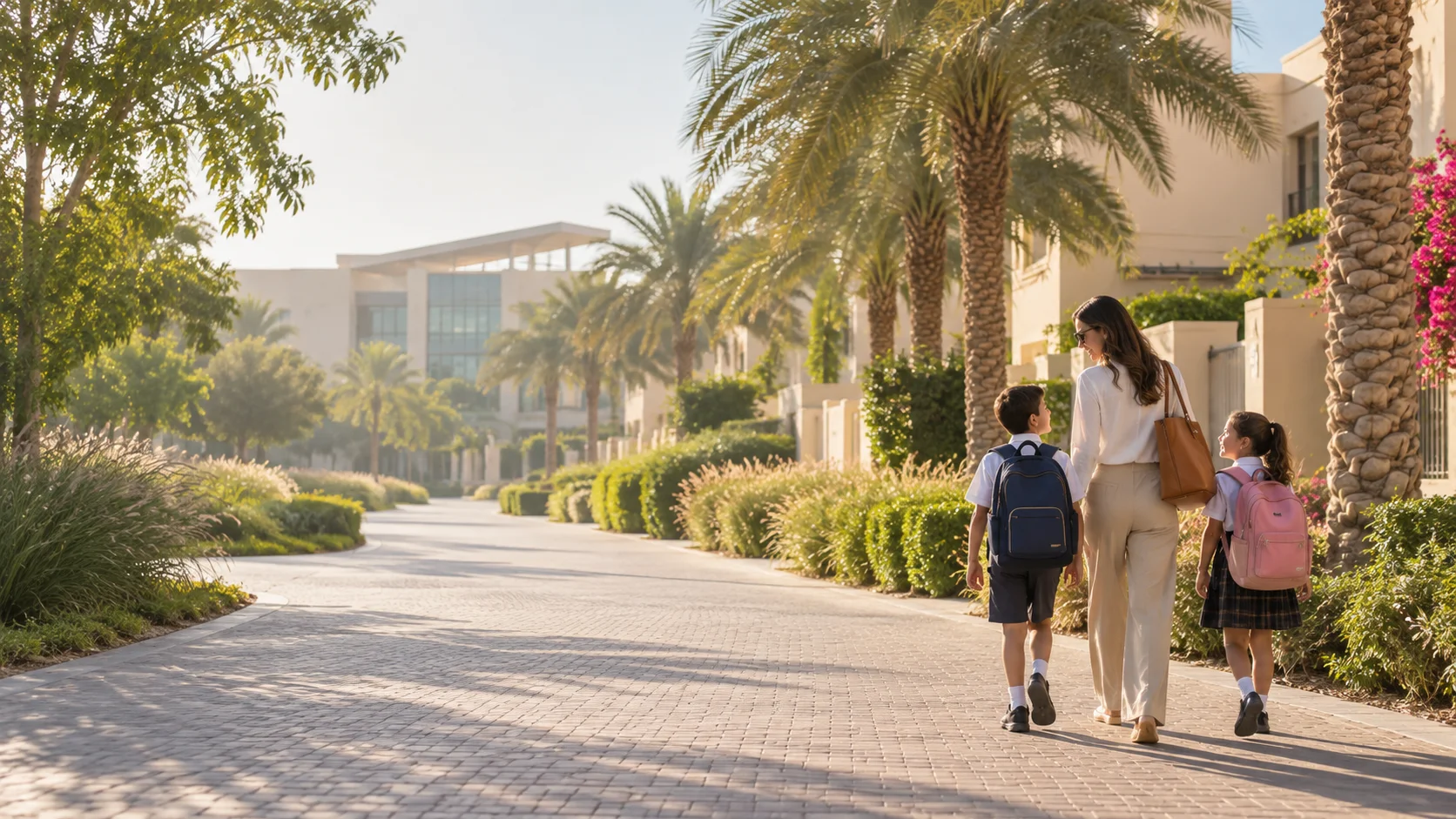
Dubai has never been a city content with standing still. In January 2026, His Highness Sheikh Hamdan bin Mohammed bin Rashid Al Maktoum officially greenlit the 20-Minute City concept under the Dubai 10X Initiative — a project designed to position the emirate a full decade ahead of competing global cities. The approval marks a pivotal shift from car-centric urban sprawl to compact, walkable, mixed-use neighborhoods where 80% of daily needs are accessible within a 20-minute walk, cycle, or sustainable transit ride.
For real estate investors, this is not just a feel-good urban planning headline. It is a structural change to how land is valued, which corridors gain demand, and where the next wave of capital appreciation will land. In this article, we break down exactly what the 20-Minute City entails, which neighborhoods are on the front line, and how to position your portfolio before the market prices in the transformation.
1. What Is the 20-Minute City Concept?
At its core, the 20-Minute City model reorganizes urban life around proximity. Instead of separating residential, commercial, and recreational zones — the default model that fueled decades of car dependency — neighborhoods are designed so that schools, clinics, parks, retail, and workplaces sit within a short, safe journey from home.
Dubai’s version rests on three pillars approved by the Executive Council:
- Fast and easy accessibility: Residents reach 80% of essential services within 20 minutes using walking, cycling, or sustainable transport — dramatically reducing private vehicle dependency.
- Enhanced safety and smart mobility: The Roads and Transport Authority (RTA) will deploy real-time traffic intelligence, autonomous vehicles, and integrated mobility platforms under its 2024–2030 strategic plan.
- Green corridors and connected pathways: Shaded, flexible mobility corridors link residential clusters to transit hubs, parks, and commercial centers. A pilot is already underway in Al Barsha 2.
The concept is not theoretical. By March 2026, the RTA had already awarded the first construction contract for Phase I of the Dubai Walk Master Plan in the historic Al Ras district.
2. The Dubai Walk Master Plan — 6,500 km of Transformation
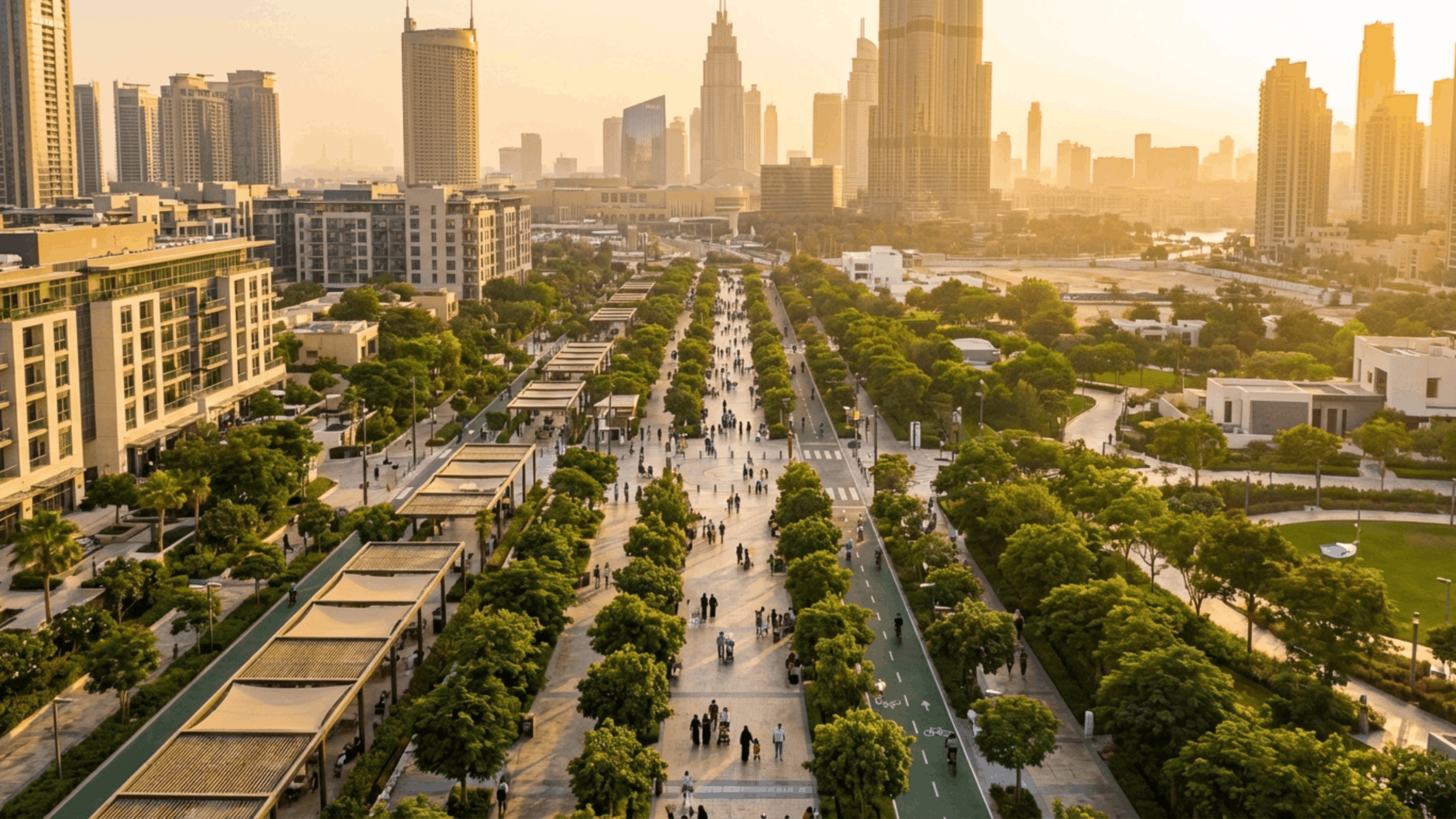
The backbone infrastructure behind the 20-Minute City is the Dubai Walk Master Plan, announced by Sheikh Mohammed bin Rashid Al Maktoum. The plan envisions a connected pedestrian network spanning 6,500 km across 160 areas of the emirate. That includes 3,300 km of brand-new pathways and the upgrade of 2,300 km of existing infrastructure, with full completion targeted by 2040.
Phase I (2025–2027) focuses on the Historic Al Ras Walkway in the old Deira district, delivering 12 km of pedestrian walkways and 5 km of dedicated cycling tracks. The route will connect landmark destinations including Al Ahmadiya School, Sheikh Saeed Al Maktoum House, Al Ras Public Library, Al Fahidi Fort, and the Al Shindagha Historic District — creating a continuous, walkable heritage corridor.
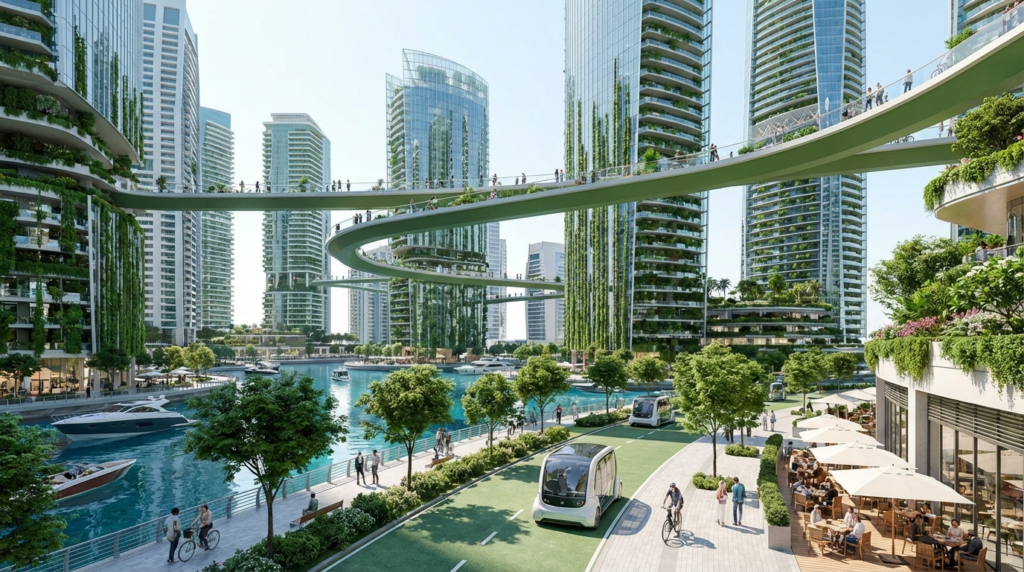
In addition, the government has committed to constructing 110 new pedestrian bridges and underpasses that will make movement between key landmarks such as Burj Khalifa, Dubai Marina, and DIFC significantly easier for pedestrians and cyclists.
3. Which Areas Are Directly Affected?
Investors need to track the specific districts earmarked for early-phase implementation. The following neighborhoods are at the forefront of the transformation:
| Area | Initiative | Investor Significance |
| Al Barsha 2 | Pilot green corridor; community walkways connecting residential areas to attractions | Early-mover advantage in an established residential zone now gaining walkability premium |
| Al Ras (Deira) | Phase I of Dubai Walk: 12 km walkways, 5 km cycling tracks, heritage route | Heritage-tourism nexus; expect short-term rental and hospitality demand surge |
| Al Fahidi | Super-block pilot under 20-Minute City concept | Cultural-district premium; rising appeal for boutique hospitality and co-working investments |
| Al Karama | Super-block pilot; enhanced pedestrian infrastructure | Affordable entry point with high upside as walkability drives rental demand |
| Al Quoz Creative Zone | Super-block pilot; creative-economy corridor | Emerging arts-and-culture hub; strong trajectory for mixed-use and studio conversions |
| Abu Hail | Super-block pilot under 20-Minute City concept | Undervalued inner-city district positioned for revitalization uplift |
| Al Khawaneej 2 | Community walkway implementation | Suburban family community gaining connectivity to retail and schools |
| Al Mizhar 1 | Community walkway implementation | Villa community with improved livability metrics, supporting price stability |

4. The 2040 Vision — Big Numbers That Move Markets
The 20-Minute City does not exist in isolation. It is one pillar of the broader Dubai 2040 Urban Master Plan, which sets the macro direction for the emirate’s growth over the next 14 years. Here are the headline targets investors need on their radar:
- Population growth: Dubai is planning for its population to reach 7.8 million by 2040 (up from approximately 3.6 million today), nearly doubling demand for housing, retail, and services.
- 55% of residents within 800 meters of public transit: This target (up from 40% currently) will concentrate value around metro stations, tram lines, and bus rapid transit corridors.
- 134% increase in tourism and hotel land allocation: More land earmarked for hospitality means more short-term rental and hotel-adjacent investment opportunities.
- Commercial land expansion to 168 sq km: Expanding commercial zones drive office and retail demand — critical for mixed-use investors.
- 60% of total area reserved for nature and green space: Sustainability mandates will shape development density and design standards, favoring projects aligned with green-building certifications.
The convergence of population growth, transit expansion, and walkability infrastructure creates a clear thesis: properties located within or adjacent to 20-Minute City pilot zones and transit corridors are positioned for outsized appreciation relative to the broader market.
5. What This Means for Dubai’s Residents
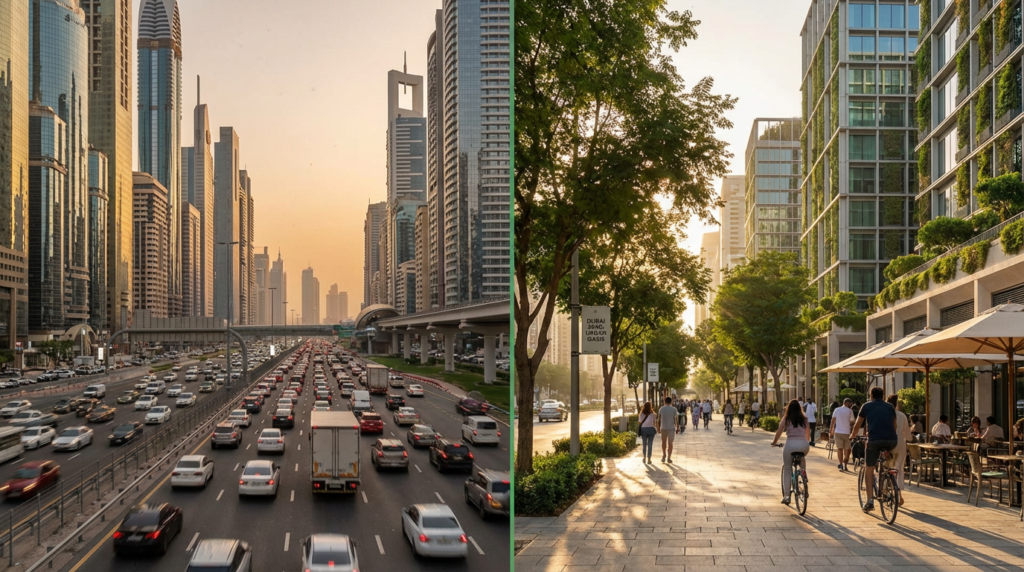
Beyond investment returns, the 20-Minute City is a fundamental quality-of-life upgrade for the people who call Dubai home. The project addresses a long-standing tension in the city: world-class infrastructure paired with heavy car dependency and fragmented pedestrian access.
- Shorter, healthier commutes: Walking and cycling become viable daily options, reducing household transport costs and improving physical well-being.
- Safer streets: The RTA’s smart mobility systems, autonomous vehicle integration, and 110 new bridges and underpasses directly target pedestrian safety — a top concern for families.
- Stronger community bonds: Walkable neighborhoods with shaded corridors, parks, and local retail naturally foster the kind of community interaction that high-rise towers and car commutes do not.
- Climate-conscious living: Shaded green pathways and reduced vehicle emissions align with the UAE’s Net Zero 2050 strategy, giving residents a tangible stake in the sustainability transition.
For expats considering a long-term move to Dubai, the 20-Minute City makes certain neighborhoods dramatically more livable — and that livability is precisely what underpins sustainable property demand.
6. How Should Investors Position Now?
The construction timeline stretches to 2040, but the market will not wait 14 years to price in these changes. Historically, property values in districts announced for major infrastructure projects in Dubai begin repricing within 12–18 months of contract awards. With Phase I construction already underway in Al Ras, the window for early positioning is narrowing. Here is a practical framework:
- Target pilot zones early: Al Barsha 2, Al Karama, Al Quoz Creative Zone, and Al Fahidi are priced below post-transformation potential. Focus on units within 800 m of announced walkway routes.
- Monitor transit-proximity metrics: The 55% transit-proximity target means stations planned for 2028–2032 will lift surrounding asset values. Cross-reference RTA route maps with your acquisition targets.
- Favor mixed-use: The 20-Minute City model inherently favors properties that blend residential, retail, and workspace. Pure residential plays miss the compounding effect of foot traffic and commercial activity.
- Consider short-term rental angles: Heritage corridors (Al Ras, Al Fahidi, Al Shindagha) will see tourism foot traffic rise, making short-term rental licensing in these zones increasingly attractive.
Ready to Invest in Dubai’s Next Chapter?
The 20-Minute City is not a concept paper — contracts are signed and construction is underway. If you want to identify the exact properties and corridors positioned for the highest returns in this transformation, I can help.
➤ Book a free consultation: [https://link.veersant.com/widget/bookings/30-minute-call-with-behnia-tavassoli-veer-sant]
➤ Follow me on LinkedIn: [https://www.linkedin.com/in/behnia-tavassoli-230026133/]