
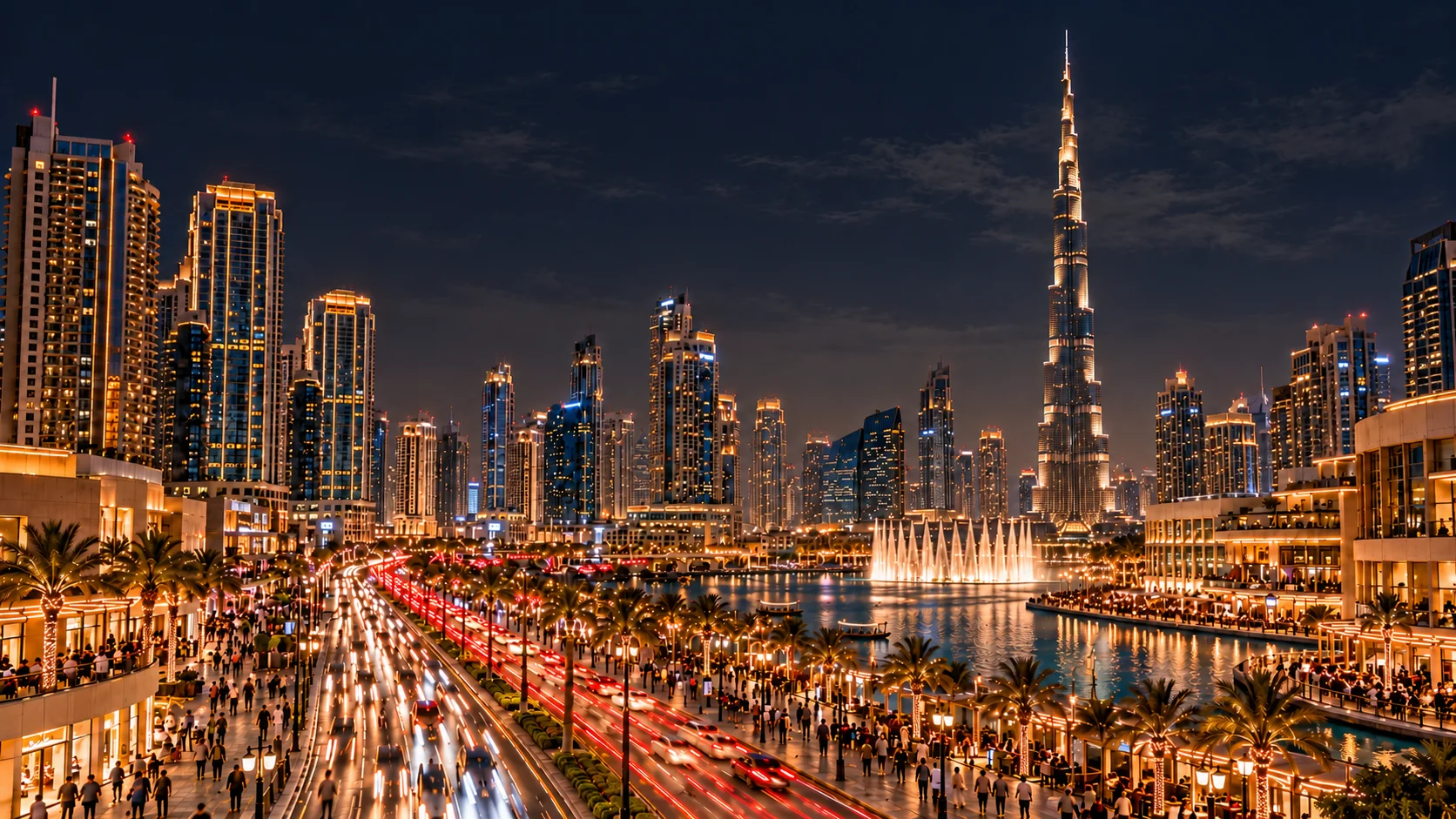
At noon on 28 September 2026, Dubai’s population stood at 4,807,185, according to the Dubai Data and Statistics Establishment (DDSE). That is 226,885 more people than at the end of 2025, or roughly one new resident every 1 minute 43 seconds.
Numbers like that travel fast. You will see them on social media, in launch presentations and in almost every off-plan pitch this quarter. The implied argument is simple: more people, more demand, higher prices.
The first part is true. The second part is where buyers get into trouble. Population growth is one of the most useful long-term signals in Dubai’s property market, but it is a demand signal, not a price forecast. Below, I set out what the latest figures actually say, what they tell you about who needs housing, and the questions to ask before you let a population headline shape a purchase.
Key takeaways
- Dubai added 226,885 residents between 1 January and 28 September 2026, about 839 a day on average, to reach 4,807,185.
- The 2026 pace is strong but slightly below 2025, when the population grew by around 332,000 (7.5%), or roughly 910 a day.
- Families grew 7.9% in 2025, to 858,000. For housing demand, this is the figure I would watch most closely.
- More than 80% of residents are aged 20–59 and 68.5% are male, so not every new resident is a buyer or a family tenant.
- Population growth supports long-term demand. It does not protect you from new supply, overpaying or a short holding period.
Dubai’s population in 2026: the numbers, with sources
| Indicator | Figure | Source · date |
|---|---|---|
| Population, noon 28 Sep 2026 | 4,807,185 | DDSE, via Emirates 24|7, 29 Sep 2026 |
| Population, end of August 2026 | 4,782,535 | DDSE, via Emirates 24|7 |
| Population, end of 2025 | 4,580,300 | Digital Dubai / DDSE, via Gulf News, Jul 2026 |
| Population, end of 2024 | 4.248 million | Digital Dubai / DDSE, via Gulf News |
| Growth in 2025 | ≈ 332,000 (+7.5%) | Digital Dubai / DDSE |
| Increase, 1 Jan – 28 Sep 2026 | 226,885 | DDSE |
| Average daily increase, 2026 to date | ≈ 839 | Calculated from DDSE figures |
| Families, 2024 → 2025 | 795,200 → 858,000 (+7.9%) | DDSE, via Emirates 24|7 |
| Average daytime population, 2025 | 6.392 million | Digital Dubai / DDSE |
| Residents aged 20–59, end of 2025 | 80.34% | Dubai Health Authority, via Gulf News, Sep 2026 |
Two things to keep in mind. First, rates such as “one resident every 1 minute 43 seconds” or “839 a day” are averages for the year to date. Growth does not arrive evenly, and the population figure changes continuously as records update. Second, the 2025 daily average works out at roughly 910 (332,000 ÷ 365, my calculation), so 2026 is running at a slightly slower pace than last year. That is still very strong growth. It is just not accelerating.
A note on how Dubai now counts its population
The 2025 and 2026 figures come from “Dubai Population Now”, a register-based system that replaced the traditional census. It links administrative records from bodies including the GDRFA, DEWA, the Dubai Land Department, KHDA and the RTA, and it counts habitual residents: people who usually live in Dubai for at least six months, or intend to.
That makes the data more current than a census taken every few years. It also means you should be careful comparing today’s figures with older estimates and milestones published under earlier methods. Like-for-like comparisons within the new series are the safest. The Gulf News report on the new system explains how it works.
What the figures tell you about housing demand
Families are the number closest to housing demand
Dubai added 62,800 families in 2025, taking the total from 795,200 to 858,000. On average, that is about 172 more families every day, according to the DDSE figures reported by Emirates 24|7.
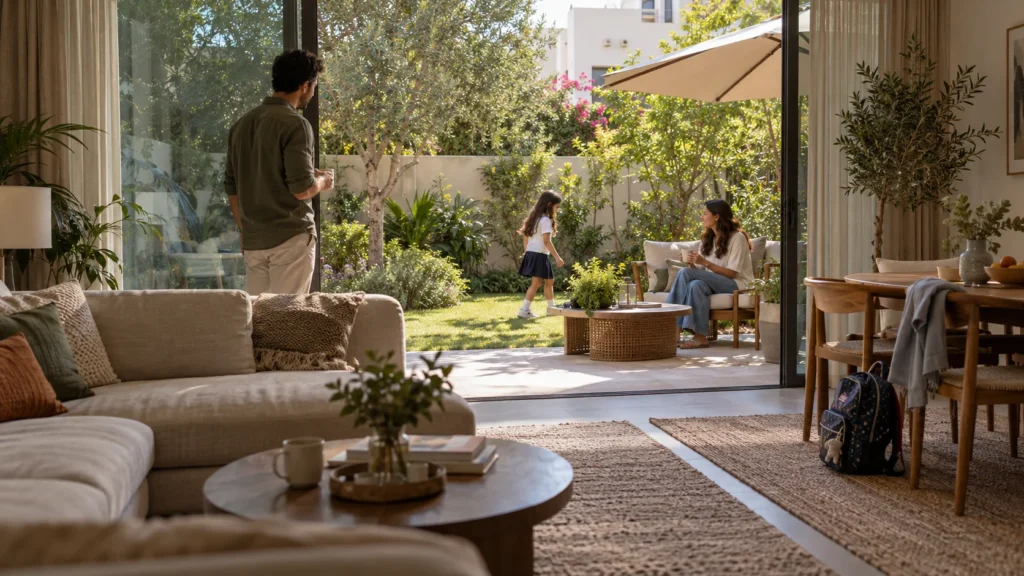
This is the figure I find most useful for property. A population count measures individuals. Homes are rented and bought by households. A family usually needs a self-contained home with enough bedrooms, and tends to weigh schools, commute times and community before price per square foot. Families also tend to stay longer and renew, which matters to a landlord far more than headline arrivals.
One caution. The published data does not break families down by size, income or whether they rent or own, and it does not separate families arriving from abroad from those formed in Dubai. It points in a useful direction. It does not tell you how many homes are needed, or of what type.
The age profile points to working-age demand
According to the Dubai Health Authority, 30–34 is the single largest age group, at 15.45% of residents. Those aged 30–39 make up 30.52% of the population, and the broader 20–59 group accounts for 80.34%. Under-20s are 16.52%, and residents aged 60 and over just 3.15% (Gulf News, September 2026).
My reading is that this is a population concentrated in its working and family-forming years. That supports a deep rental pool and, over time, a pipeline of residents who may move from renting to owning. But age is not income. Nothing in this data tells you who can afford a two-bedroom apartment in one community or a four-bedroom villa in anot
Not every new resident is your tenant
Men made up 68.5% of Dubai’s population in 2025, about 3.14 million people. Read carefully, that suggests a large share of the population lives as single working residents rather than in family households. Some of that demand is met through employer-provided or shared accommodation, which may never reach the market you are buying into.
This is why I am wary of any pitch that converts a daily population figure straight into demand for a specific property. The steps in between matter.
The daytime city is about 40% larger
On an average day in 2025, 6.392 million people were in Dubai during peak daytime hours: 4.58 million residents plus more than 1.81 million people present for work, tourism, study or shopping.
Daytime visitors do not rent homes, so this is not residential demand. It is relevant in two ways: it shows the pressure on roads and transport, and it matters if you are looking at retail, hospitality or commercial property. For anyone buying a home, it is a reminder to test the commute at peak hours rather than trusting the map.

What population growth does not tell you
The population headline answers one question: is the city growing? It leaves several others open, and those are usually the ones that decide whether a purchase works.
- It is not a price index. Prices and rents are set where demand meets supply, for a specific product in a specific community. A growing city can still see prices soften in places.
- It says nothing about supply. A community where hundreds of near-identical homes complete in the same year can face pressure on rents and resale prices regardless of city-wide growth.
- It is emirate-wide. An average of 839 new residents a day is spread across the whole of Dubai. It does not tell you where they live, or whether they will choose the community you are considering.
- It is Dubai only. These figures do not describe Abu Dhabi or the wider UAE, which have their own data and their own markets.
- The pace can change. 2026 is running slightly below 2025. Relocation decisions respond to the economy, regulation and regional events.
The road to 5 million: arithmetic, not a forecast
Dubai needs another 192,815 residents to reach 5 million, which puts it 96.1% of the way there. If the 2026 average of roughly 839 a day held, the city would pass that mark around May 2027.
That is simple arithmetic. It is not an official forecast, and the pace could easily rise or fall. More importantly, a milestone does not change the fundamentals of any individual property. It will make headlines. It is not a catalyst.
What I would watch instead is the trend: whether the daily average holds, and what the 2026 family figures show when they are published.
How to use population data in your own decision
Population data is good context. Use it as a filter, not a reason to buy.
- Name your likely tenant or next buyer. Families, young professionals and single workers want different homes in different places. The data supports demand from all three, but not equally for every product.
- Check supply for the same product. Ask how many homes of the same type, in the same community, complete in the same year as yours.
- Test the price against transacted data. Compare the asking price with what the same type actually sold for, using DXB Interact or Dubai Land Department data.
- Work out the net yield, not the gross. Deduct service charges, maintenance, management and at least a month of vacancy. Then test what happens if rent falls. My guide to entry prices and rental yields walks through the comparison.
- Be honest about your time horizon. Population growth is a long-term argument. It tends to support patient owners more than buyers relying on a quick resale.
If families are your target market, school access often decides where they live. I compare the main options in Dubai villa communities near schools.
Conclusion
Dubai’s growth is real and well documented: 4.8 million residents, 858,000 families and a pace of roughly 839 new residents a day in 2026. That is a solid foundation for long-term housing demand, and it is one reason many international investors keep the city on their shortlist.
But a growing city is not the same as a rising price for the property in front of you. The question is not whether Dubai is growing. It is whether a particular home is positioned to benefit from that growth, at the price you are paying, over the time you plan to hold it.
Turn the population headline into a property decision
Population data tells you the city is growing. It cannot tell you whether a particular apartment, townhouse or villa suits your budget, your time horizon or the tenant you are likely to attract.
If you are weighing a purchase in Dubai, send me what you are considering: the community, the property type, your budget and how long you plan to hold. We can look at who the realistic tenant or next buyer is, what the same type has actually transacted at, and whether the timing works for you. If the answer is to wait, I will tell you that too.
Free and no obligation · Dubai-based team · Replies during working hours (GST)
FAQ
What is Dubai’s population in 2026?
According to the Dubai Data and Statistics Establishment, Dubai’s population was 4,807,185 at noon on 28 September 2026. It was 4,782,535 at the end of August 2026 and 4,580,300 at the end of 2025. The figure is updated continuously, so check the latest official release before relying on it.
How fast is Dubai’s population growing?
Dubai’s population grew by around 332,000 people, or 7.5%, in 2025. Between 1 January and 28 September 2026 it grew by a further 226,885, an average of about 839 people a day. That is slightly below the 2025 average of roughly 910 a day.
Does population growth mean Dubai property prices will rise?
Not on its own. Population growth supports demand, but prices and rents also depend on new supply, financing conditions and the price you pay. A city can grow while prices in particular communities soften. Treat population data as context, not as a price forecast.
How many families live in Dubai?
Dubai had 858,000 families in 2025, up from 795,200 in 2024, an increase of 62,800 or 7.9%. The published figures do not break families down by size, income or tenure, so they indicate the direction of demand rather than the exact number of homes needed.
When will Dubai reach 5 million residents?
There is no official date. Dubai needed 192,815 more residents as of 28 September 2026. If the 2026 average of about 839 a day continued, it would reach 5 million around May 2027, but that is a simple projection and the pace may change.
Do these figures apply to Abu Dhabi or the whole UAE?
No. These figures cover the Emirate of Dubai only. Abu Dhabi and the other emirates publish their own statistics, and their property markets have different supply, pricing and demand patterns.