September’s numbers are in, and they are not pretty. Dubai recorded 10,207 residential sales last month, 7.9% fewer than in August and 45.1% fewer than in September 2025, according to figures published by Exclusive Links Real Estate on 23 October 2026.
I’m not going to tell you that’s nothing. It isn’t. Activity has come down a long way from last year, and anyone who says otherwise is selling you something.
But before you decide what that means for you, ask the question almost nobody asks when they read a headline like this: which market? Off-plan or ready? Studio or three-bedroom? Which community? Because when you look underneath the total, September doesn’t show a market falling evenly. It shows a slowdown in which buyers are getting choosier, and some parts of the market quietly doing better than the month before.
Below I go through what the figures actually say, what they don’t, and what a more selective market means if you’re buying or selling right now.
Key takeaways
- Dubai recorded 10,207 residential transactions worth AED 22.35 billion in September 2026: down 7.9% on August and 45.1% on September 2025.
- Ready homes held up best. Secondary sales fell just 3.3% month on month against 9.8% for off-plan, and took 30.2% of all transactions, their highest share since February.
- Over the third quarter, secondary sales rose roughly 15–16% on Q2, while total transactions slipped only 2.8%.
- Studios fell sharply. One, two, three and five-bedroom homes all recorded more sales than in August.
- Prices have moved far less than volumes: about −4% year on year city-wide, with ready homes up 1.8% (PropertyIndex PIX, September 2026).
- In a selective market, the product, the community and the price you pay decide the outcome. Buying “in Dubai” is no longer enough.
The numbers, with sources
| Indicator | Figure | Source · date |
|---|---|---|
| Residential transactions, Sep 2026 | 10,207 (AED 22.35bn) | Exclusive Links, 23 Oct 2026 |
| Change in volume vs Aug 2026 | −7.9% | Exclusive Links |
| Change in volume vs Sep 2025 | −45.1% | Exclusive Links |
| Change in value vs Sep 2025 | −48.8% | Exclusive Links |
| Average transaction value | AED 2.14m → 2.19m | Exclusive Links |
| Secondary share of transactions | 30.2% | Exclusive Links |
| Month on month: off-plan vs secondary | −9.8% vs −3.3% | Exclusive Links |
| Residential transactions, Q3 2026 | 34,410 (−2.8% vs Q2) | Exclusive Links |
| Secondary sales, Q3 vs Q2 | +14.9% / +16% (to 10,055) | Exclusive Links / Betterhomes |
| Price index, Sep 2026, year on year | Market −4.0% · apartments −4.5% · villas −1.2% · ready +1.8% | PropertyIndex PIX©, Sep 2026 |
| Homes scheduled for delivery in 2027 | 136,815 | Betterhomes Q3 2026 report |
A note on the data. Every agency counts slightly differently: Cavendish Maxwell put September at about 10,300 residential sales, and DXBinteract counted 11,340 across all property types. The totals differ; the direction doesn’t. When you compare figures, compare like with like.
Yes, the market has slowed. Let’s start there.
A 45% fall on last year is a big number, and I’d rather you heard it from me than discovered it later.
But remember what last September was. 2025 was an exceptional year, the kind where you could buy almost anything in Dubai and look clever a few months later. That was never a normal market, and nobody serious expected it to last forever. Measured against that, almost any month looks weak.
The quarter-on-quarter picture is calmer. Dubai recorded 34,410 residential transactions in Q3, only 2.8% fewer than in Q2. That isn’t a market falling off a cliff. It’s a slowdown, and a market finding its level.
And prices have moved much less than activity. The PropertyIndex PIX shows the whole market about 4% lower than a year ago. Fewer people are buying. That is not the same as everyone’s home being worth 45% less.
What has really changed is who is buying and what they’re buying.
“The market” is not one market
Ready homes held up better than off-plan
In September, off-plan sales fell 9.8% from August. Secondary sales, meaning homes that are already built, fell just 3.3%. Ready homes made up 30.2% of all transactions, their highest share since February.
Over the whole quarter the gap is even clearer. Secondary sales grew by around 15% to 16% on Q2, depending on whose data you read, while off-plan fell. Betterhomes puts the secondary share at 29% for Q3, up from 24% the quarter before. In the villa market, my own reading of Dubai Land Department data shows resales outnumbering new villa sales from developers every month since July.
Bigger homes held up better than studios
Studio transactions dropped sharply in September. One, two, three and five-bedroom homes all recorded more sales than in August.
That’s why the average transaction value went up, from AED 2.14 million to AED 2.19 million (about US$596,000), in a month when the market slowed. Be careful with that number. It doesn’t mean anyone’s home went up in value. It means the mix of what sold changed: fewer small units, more family-sized ones.
So, which market are you in?
When someone tells you “the market is down”, ask what you’re actually comparing. A studio bought off-plan in 2025, in a building with hundreds of near-identical units handing over in 2027? Or a three-bedroom you can walk into tomorrow, in a community that already has its schools, its supermarket and its traffic pattern? Same city. Same month. Completely, completely different market.
Why buyers are turning to ready homes
The reasons are not complicated. With a ready home:
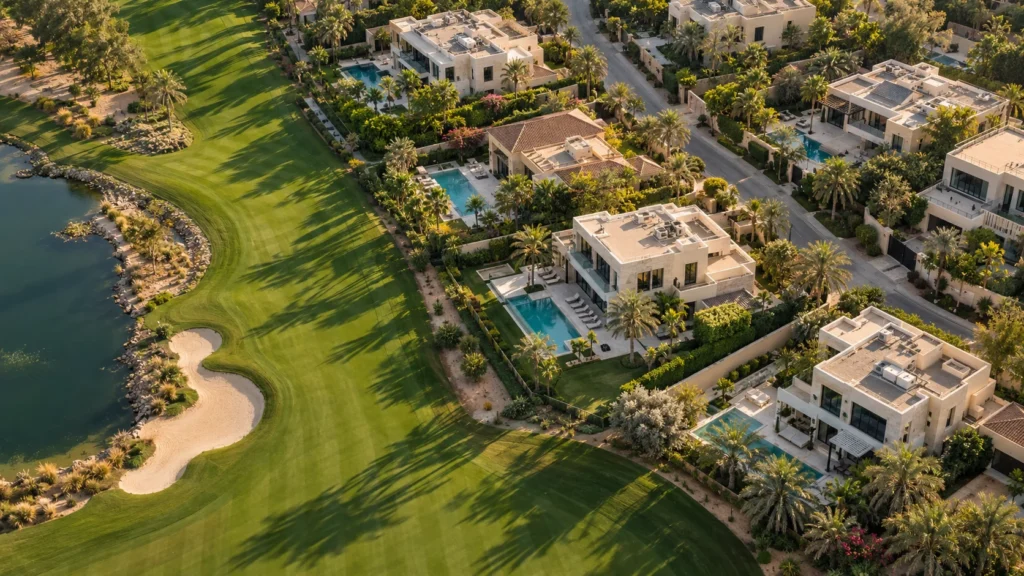
- You see what you’re buying. The finishes, the view, the light, the noise. Not a render.
- The community already exists. You can test the school run at 7:30 in the morning instead of trusting “20 minutes from Downtown” on a brochure.
- Rent starts now. For an investor, there is no handover risk and no years of waiting for income.
- There is price evidence. You can compare the asking price with what the same layout in the same building actually sold for.
This isn’t me turning against off-plan. Off-plan is still around 70% of the market, and I still recommend it to clients when the developer, the payment plan and the handover date make sense. A handover a few years out can be its own kind of risk management, because today’s uncertainty has time to settle before you take delivery.
What has changed is the question. A year ago it was “which launch?” Today it’s “this launch, or something that’s already built: which is better value for me?” And in off-plan, the advantage has moved from price to choice. A year ago we would submit ten EOIs and be lucky to secure four or five units for our clients. Today, buyers can often sit with the developer and choose the unit, the layout and the floor they actually want.
What “selective” means if you’re buying
A selective market is good news for a buyer who has done the work, and bad news for one who hasn’t. You have more room to negotiate on resale, more choice on off-plan, and more time to decide. Use it. Before you pay a deposit, I’d want answers to five questions:
- What did the same type actually sell for in the last six months? Sold, not listed. Check Dubai Land Department data or DXB Interact for the same building or community.
- Who is your tenant, or your next buyer? Name them. A young professional, a family, a single worker in shared housing? Each wants a different home in a different place.
- How many similar homes complete nearby in 2027? Around 136,815 homes are scheduled for delivery across Dubai next year. What matters is how many look like yours, on your street, in your handover year.
- What’s the net yield? After service charges, maintenance, management and at least one empty month. Then test it with a lower rent.
- If you had to sell in three years, who buys it, and what’s their alternative? If the answer is “a newer, cheaper unit next door”, that’s your answer.
If you can’t answer one of these, you don’t have an investment case yet.
You have a hope. My guide to entry prices and rental yields walks through the yield maths, and What Can You Buy in Dubai With 2 Million? shows what each budget gets you today.
What it means if you’re selling
Honestly? Price on today’s evidence, not last year’s.
Louise Heatley, who has run Exclusive Links since 2005, makes a point in the same release that I agree with: agents should guide clients using “current market evidence rather than yesterday’s headlines.” If your agent’s argument is “a unit like yours sold for X last year”, ask: in which month? Which floor? Which view? And what has sold since?
Overpriced homes in a market like this don’t sit still. They go stale, and then they sell for less than they would have at the right price on day one.
The good news: ready homes are where buyers are moving. If yours is well presented and correctly priced, you’re selling into the stronger half of the market. If you want a realistic number based on recent sales, send me the details.
What I’m watching next
No one knows how long this phase lasts. I don’t, and anyone who tells you they do is guessing. What I’m watching instead:
- The secondary share. Does it stay at or above 30% through Q4, or was September a one-off?
- Studios. One weak month, or the start of a trend? With 2027 handovers coming, small units in high-supply areas are where I’d be most careful.
- Where 2027 supply lands. The city-wide total matters less than which communities it clusters in.
- Prices by segment, not the headline. Apartments, villas, ready and off-plan are moving at different speeds. Watch yours.
Conclusion: the “buy anything” market is over, and that’s healthy
In 2025 you could buy almost anything in Dubai and look smart. That’s finished. In my opinion, that’s a good thing. A market where buyers compare, negotiate and ask for evidence is a market that rewards good decisions and punishes lazy ones.
Dubai’s long-term fundamentals haven’t gone anywhere. The population has passed 4.8 million, the infrastructure keeps coming, and international buyers are still here. But fundamentals won’t rescue a bad purchase. The question isn’t “is Dubai still a good market?” It’s “which market am I in, and is this property, at this price, right for me?”
Find out which market you’re actually in
Headline numbers tell you the city has slowed. They can’t tell you whether the property you’re looking at, or the one you already own, is in the part of the market that’s holding up.
Send me four things: the community, the property type, your budget and how long you plan to hold. I’ll come back with what the same type has actually transacted at, who the realistic tenant or next buyer is, and whether now is the right time for you. If the answer is to wait, I’ll tell you that too.
FAQ
Is the Dubai property market crashing in 2026?
The data doesn’t show a uniform crash. Residential transactions in September 2026 were 45.1% lower than a year earlier, but only 2.8% lower in Q3 than in Q2, and prices were about 4% lower year on year according to PropertyIndex PIX. It is a slowdown in activity with large differences between segments: ready homes and larger units have held up better than off-plan studios.
Is now a good time to buy property in Dubai?
It depends on the segment, the price and how long you plan to hold. Buyers currently have more room to negotiate on resale and more choice of units on off-plan. That helps a buyer who checks recent transaction prices, net yield and nearby supply. It is not a reason to buy any property simply because the market is quieter.
Is off-plan or ready property better in Dubai right now?
Ready homes offer certainty, immediate rental income and real price evidence, which is why their share of sales rose to 30.2% in September 2026. Off-plan offers payment plans and a choice of units, but carries handover and supply risk, with around 136,815 homes due for delivery in 2027. Compare both options in the same community, at the same budget.
Why did the average transaction value rise when the market slowed?
Because the mix changed. Studio sales fell sharply in September 2026 while one, two, three and five-bedroom sales rose, so the average value moved from AED 2.14 million to AED 2.19 million. A higher average does not mean individual homes rose in value.
Should I sell my Dubai property now?
If you need or want to sell, price against recent comparable sales rather than 2025 peaks. Ready homes are seeing relatively stronger demand, so a correctly priced, well-presented ready home is selling into the more resilient part of the market. Overpricing tends to cost more time and money than pricing right from the start.
Where can I check real Dubai property transaction prices?
Use Dubai Land Department open data or tools built on it, such as DXB Interact. Look at sold prices, not listing prices, for the same property type in the same building or community over the last six to twelve months.