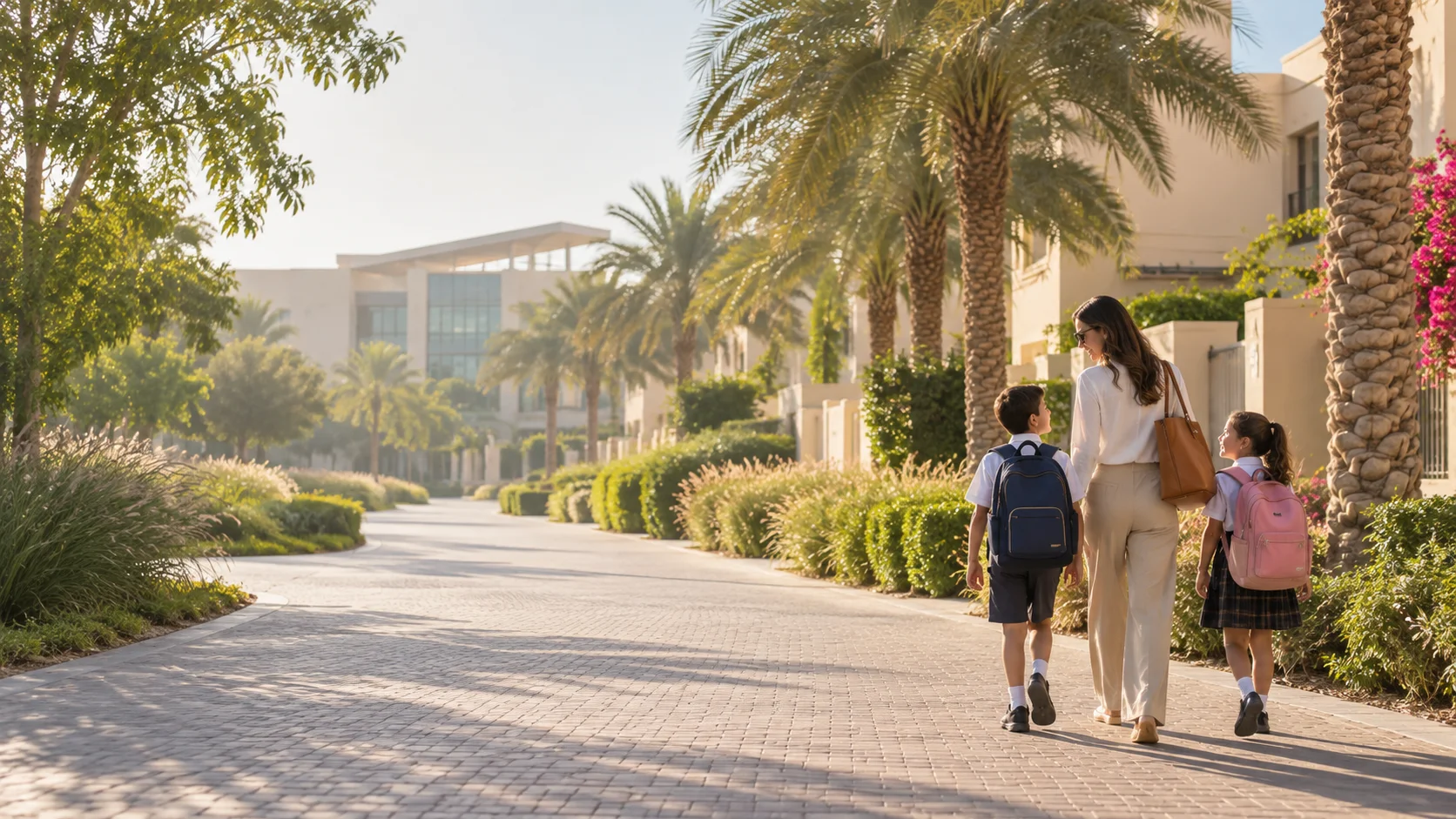

For years, the Dubai property question was simple: which neighbourhood? In 2026, with the largest single-year supply wave in over a decade landing on the market, the more valuable question has quietly changed. This guide makes the case that the developer behind your unit, their delivery record, community control and resale depth, is now the variable that most separates a good investment from a stranded one, and profiles the eleven names shaping the skyline so you can choose deliberately.
| AED 252B Q1 2026 transactions | +31% value, year-on-year | ~6.7% avg. gross yield | ~120K new units due 2026 |
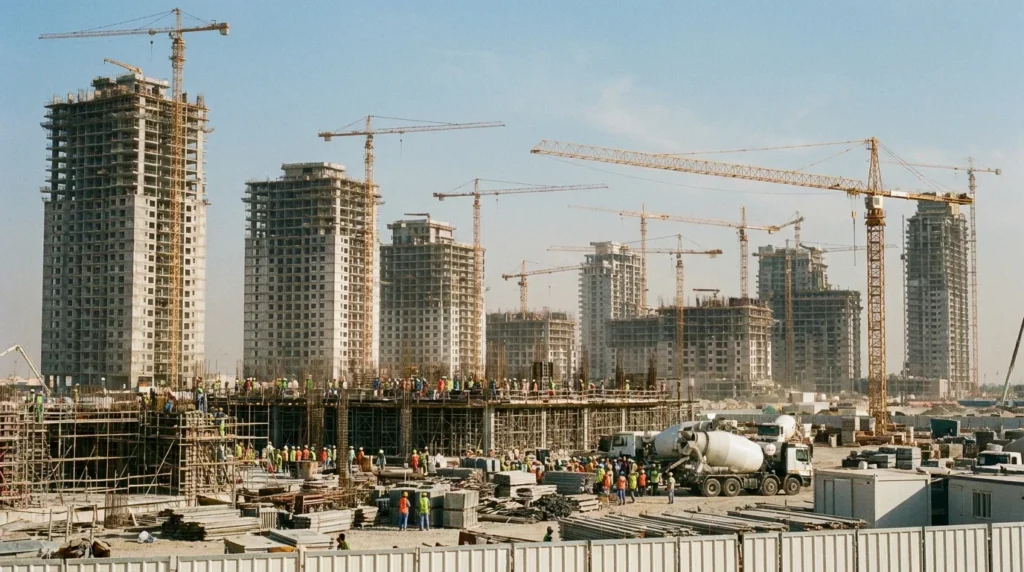
The shift nobody is pricing in: from a location game to a selection game
Dubai entered 2026 from a position of strength, not froth. After two years of double-digit price gains, the market has moved into a calmer, more mature phase, record capital inflows, moderating price growth, and a delivery pipeline that is finally catching up with demand. Most commentary stops there and goes back to ranking neighbourhoods. That misses the more important structural change.
Roughly 120,000 new homes are expected to complete in 2026, the largest single-year delivery in over a decade. When supply is scarce, almost any address appreciates and almost any unit rents; the location does the heavy lifting. When supply is abundant, that stops being true. Two apartments on the same street, handed over the same month, can diverge sharply in resale price and rental performance based on one thing buyers used to treat as a footnote: who built them.
That is why 2026 is best understood as a selection market. The edge is no longer just picking the right community, it is picking a developer whose brand supports resale liquidity, whose build quality holds tenants, and whose track record means your keys actually arrive on time. This guide is built entirely around that decision.
| The one-line thesis In a supply-rich market, the developer is a risk factor, and a return driver. Who you buy from now matters as much as where you buy. Everything below is organised to help you choose deliberately rather than by brochure. |
Three reasons the developer is now the decisive variable
1. Supply is rebalancing power toward buyers, unevenly
The record incoming supply will gradually shift pricing power toward buyers in select apartment districts, while prime and branded stock stays supply-constrained and resilient. Translation: in high-pipeline pockets, your future buyer will have dozens of near-identical units to choose from. A recognised developer name becomes a tiebreaker that protects your exit price. A weak or unproven one becomes a discount you pay on the way out.
2. Rental growth has cooled and quality now sorts winners from the rest
Rental growth has decelerated sharply, from around 6.2% in December 2025 to roughly 1.5% by April 2026. In a market where rents rose for everyone, building quality was invisible. In a maturing rental market, location, build quality and developer reputation increasingly separate the units that command rent and hold occupancy from those that sit empty. The landlord’s edge has moved from timing to product.
3. A huge pipeline raises completion risk and track record is priced in
When 120,000 units are under construction at once, delivery discipline is stretched across the whole market. A developer with a deep completed base and a history of handing over on time is a materially different proposition from a first-cycle name whose pitch is product and price rather than a delivery record. This is the difference between buying an asset and financing a promise, and in 2026 that difference is bankable.
| What this means for price appreciation Price growth is forecast to moderate to 5–8% in 2026, down from the 12–22% surges of 2024–2025, with analysts modelling roughly 4% average annual growth over the next five years. A calmer market rewards selection over speculation: gains come from buying the right sponsor at the right entry, not from a rising tide. |
How to read the field: three tiers, eleven developers
Not all developers compete on the same axis. It helps to group them by scale and strategy before comparing them, because a boutique design house and a mass-market volume builder are solving completely different problems for completely different buyers.
Titans: the largest names by sales and pipeline. Deepest secondary markets, most liquidity, steadiest (slower) upside. Emaar, Damac, Binghatti, Sobha.
Specialists: dominant in a distinct community type or volume niche. You buy them for a specific thesis: waterfront scarcity, lifestyle districts, or low-ticket scale. Nakheel, Meraas, Azizi.
Boutiques: focused scale, design-led or ultra-prime. Higher beta, thinner liquidity, stronger identity. Ellington, Nshama, H&H, Mr. Eight.
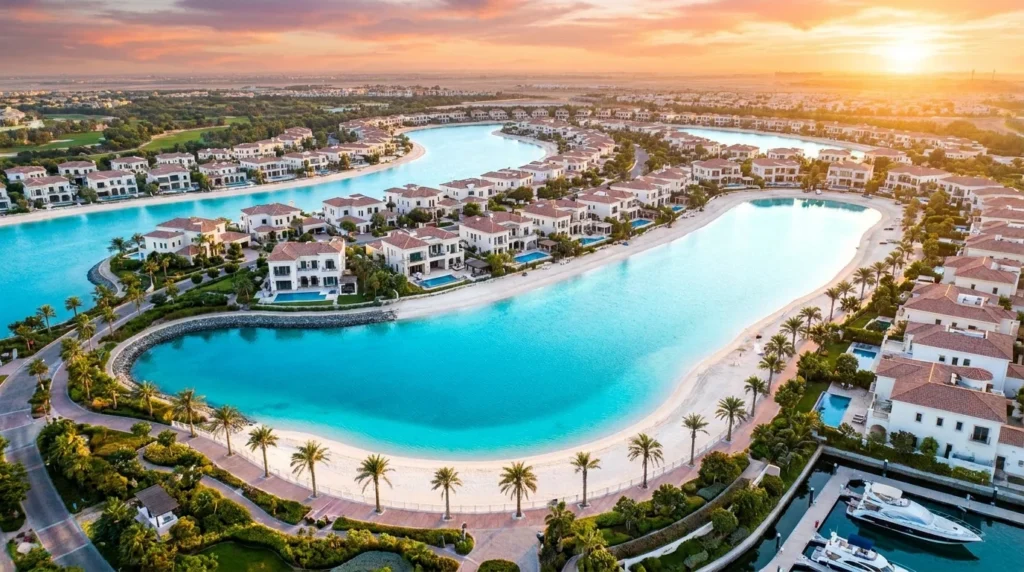
The eleven at a glance
Data window: developer transaction data, Jul 2025 – Jun 2026. Completed and pipeline figures are residential units; “primary” is the off-plan share of sales by value. Figures rounded.
| Developer | Tier | Signature communities | Completed | Pipeline | Off-plan |
|---|---|---|---|---|---|
| Emaar | Titan | Downtown, Dubai Hills, Creek Harbour | ~91K | ~56K | ~61% |
| Damac | Titan | Damac Hills, Lagoons, Islands | ~48K | ~49K | ~57% |
| Binghatti | Titan | JVC, Business Bay, Al Jadaf | ~13K | ~42K | ~97% |
| Sobha | Titan | Sobha Hartland 1 & 2, Central | ~7K | ~29K | ~95% |
| Nakheel | Specialist | Palm Jumeirah, Dubai Islands | ~75K | ~7K | ~67% |
| Meraas | Specialist | City Walk, Bluewaters, d3 | ~6K | ~9K | ~70% |
| Azizi | Specialist | Al Furjan, Jebel Ali, Azizi Venice | ~18K | ~38K | ~83% |
| Ellington | Boutique | JVC, Dubai Hills, Al Marjan | ~3.5K | ~13K | ~98% |
| Nshama | Boutique | Town Square Dubai | ~10K | ~5K | ~99% |
| H&H | Boutique | DIFC, Jumeirah, Downtown | ~0.1K | ~2.6K | ~70% |
| Mr. Eight | Boutique | Dubai Islands, Dubailand, JVT | — | ~1.8K | ~91% |
The eleven, decoded: best-for and watch-out
These are working verdicts, not endorsements; the point is to match a developer’s profile to your objective. Read the “watch-out” as carefully as the “best for.”
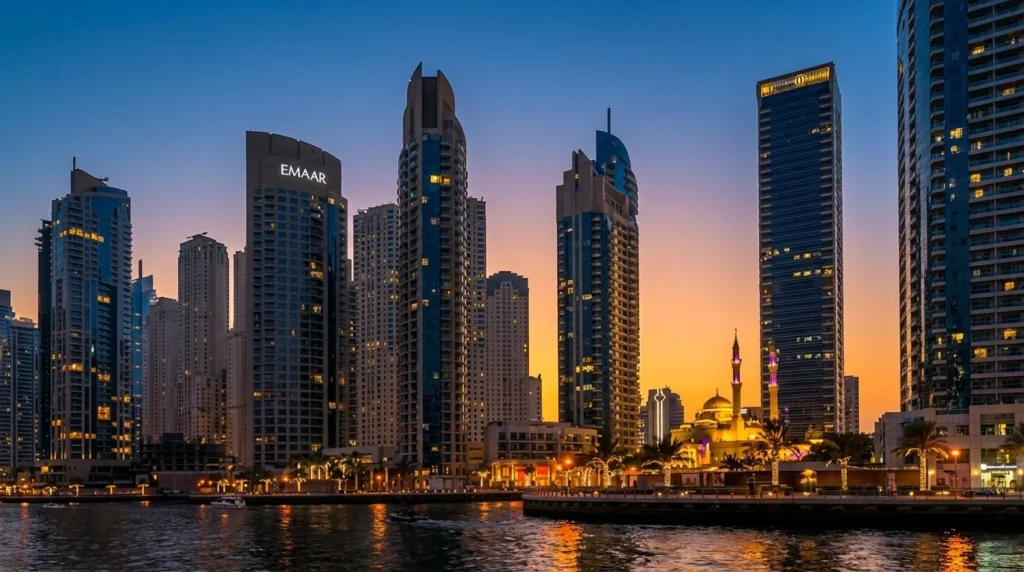
Emaar · Titan
“The safe default. Buy for liquidity and trust, not for thrills.”
Dubai’s blue-chip benchmark and the deepest secondary market in the city (~54K apartments, ~31K villas completed). The name institutional capital and end-users default to.
| Best for Capital-preservation investors and end-users prioritising liquidity, brand trust, and proven delivery. Watch-out Premiums are already priced in, upside is steadier and slower than smaller, higher-beta names. |
Damac · Titan
“Branded villas with momentum, higher beta than Emaar.”
The master of the themed, branded community (Cavalli, de Grisogono), riding a villa-led wave through its Lagoons and Islands master plans. One of the most balanced apartment/villa pipelines in the market.
| Best for Growth-oriented investors chasing branded villa appreciation and families wanting amenity-rich community living. Watch-out More cyclical than the market leader, check delivery timelines and phasing on themed launches. |
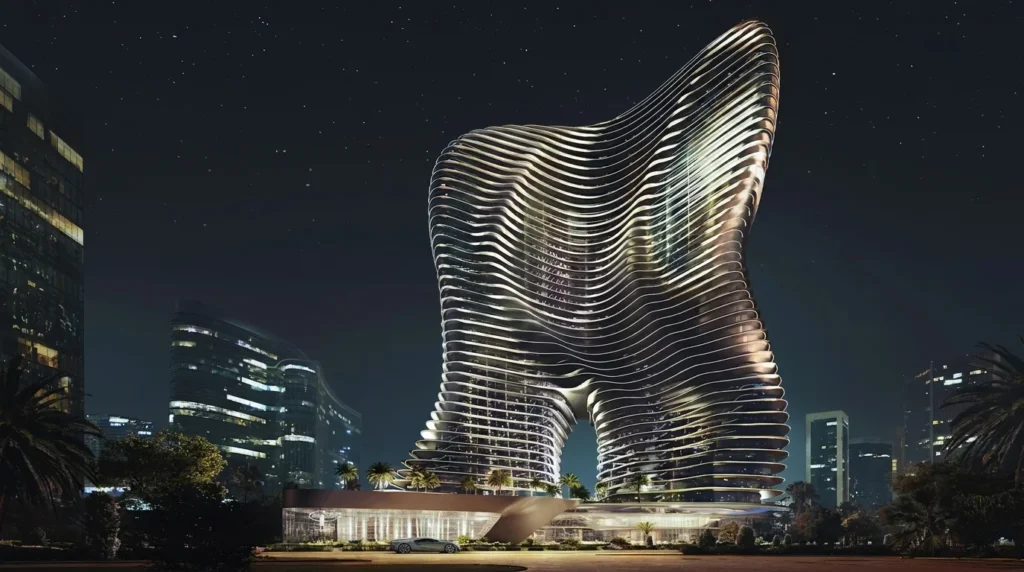
Binghatti · Titan
“The off-plan yield engine, fast, affordable, everywhere.”
The fastest-scaling name of the cycle. Recognisable architecture, rapid build cadence and “affordable luxury” pricing, now extending into branded towers (Mercedes-Benz, Bugatti). An almost entirely apartment pipeline (~42K) skewed to studios and 1-beds.
| Best for Yield-and-velocity investors targeting entry-priced apartments with strong rental demand, and buyers wanting branded design at mid-market prices. Watch-out Heavy studio/1-bed supply in JVC can cap rental growth, check building-level competition. |
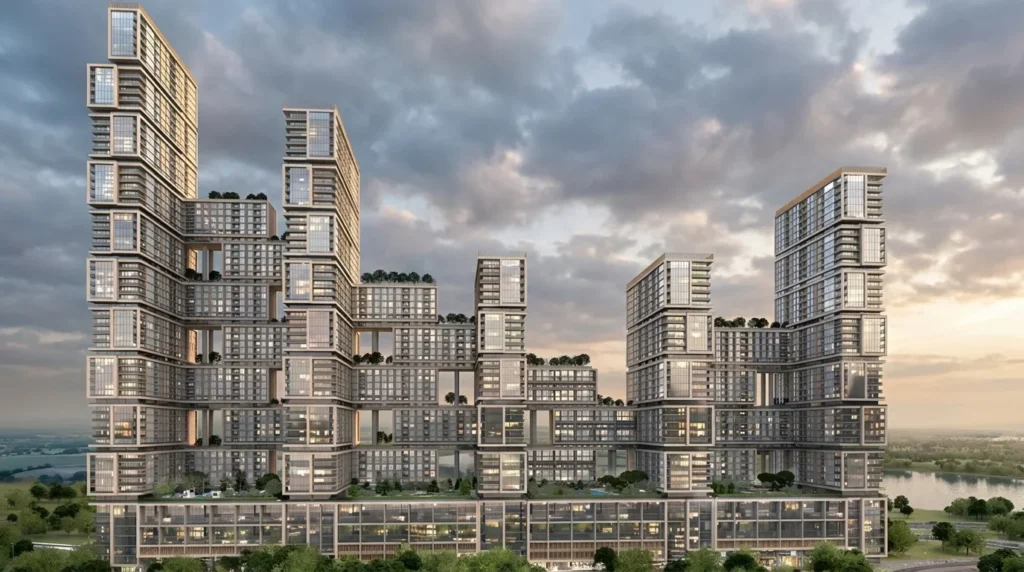
Sobha · Titan
“Build quality first, own it, don’t just trade it.”
Premium, vertically-integrated construction anchored by Sobha Hartland 1 & 2. Controls its own build chain, which shows up in finish quality and end-user demand.
| Best for End-users and quality-focused investors who prioritise build standard and long-term hold over quick flips. Watch-out Overwhelmingly off-plan (~95%) with a large pipeline, concentrate on delivery phasing and hold horizon. |
Nakheel · Specialist
“Trophy waterfront and scarcity, Dubai’s landmaker.”
The government-backed creator of Dubai’s land itself, Palm Jumeirah, Palm Jebel Ali, Dubai Islands. A deliberately tight new pipeline focused on premium waterfront, where scarcity supports prime values.
| Best for Trophy-asset and waterfront investors seeking prestige, plus value buyers in its mature, high-yield legacy communities. Watch-out Thin new pipeline and large prime tickets, waterfront entry prices are substantial. |
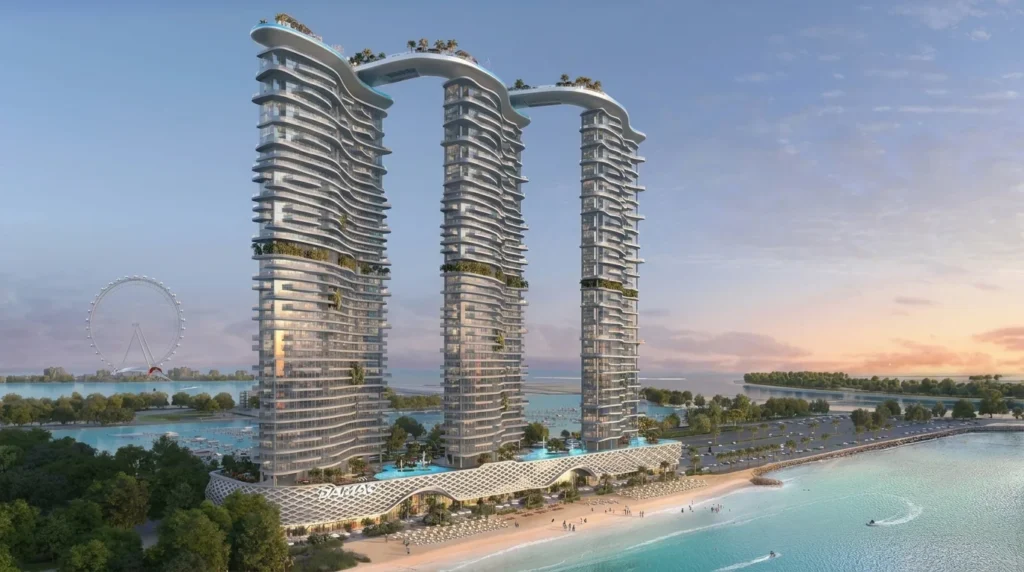
Meraas · Specialist
“Lifestyle districts with built-in footfall and short-let appeal.”
The lifestyle curator, City Walk, Bluewaters, La Mer, wrapping residences in retail, beachfront and culture. Owns marquee retail that sustains value.
| Best for Lifestyle-led buyers and investors targeting prime central districts with premium rental and short-let demand in walkable destinations. Watch-out Boutique volume and premium entry price, less liquid than mass-market apartment stock. |
Azizi · Specialist
“The lowest entry tickets, at a massive scale.”
High-volume, accessibly-priced apartments anchored by the canal-themed Azizi Venice megaproject and a dense run of Al Furjan and Jebel Ali towers. Among the largest pipelines in this guide (~38K).
| Best for Budget-conscious investors seeking low entry tickets and strong gross yields in commuter-belt apartments. Watch-out Huge pipeline, scrutinise phasing and delivery timelines before committing off-plan. |
Ellington · Boutique
“Design-led boutique with genuine resale appeal.”
Dubai’s “design-first” developer, wins on architecture, interiors and amenity quality rather than volume. A loyal owner-occupier following that supports premium resale.
| Best for Discerning end-users and investors targeting design-premium resale and quality tenants. Watch-out Small scale, be selective by project; not every location carries the same premium. |
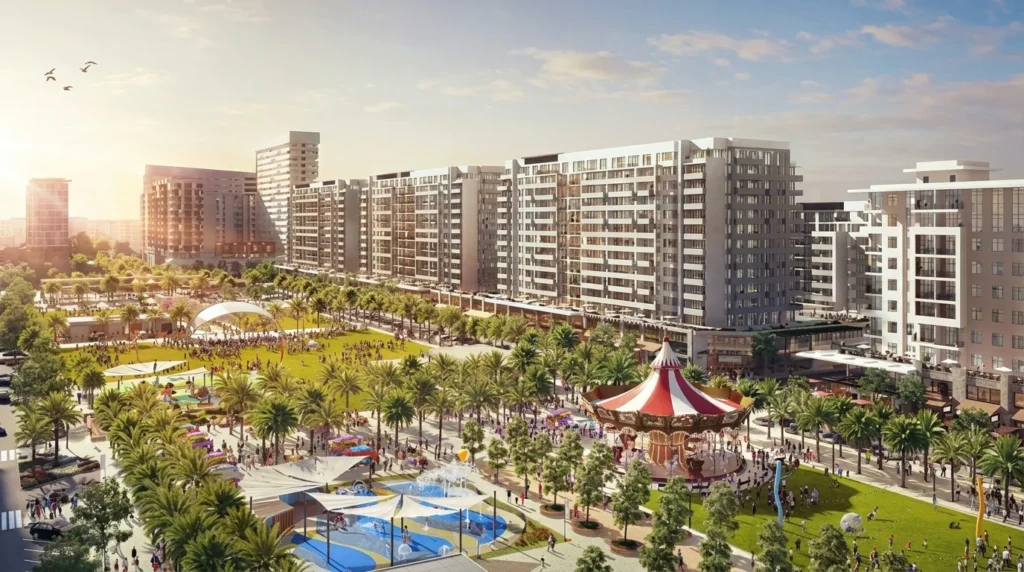
Nshama · Boutique
“Affordable community living, done properly.”
The single-community specialist behind Town Square Dubai, a self-contained, affordable master community of parks, retail and schools that has become a benchmark for value family living.
| Best for First-time buyers, end-user families and yield investors wanting affordable, amenity-rich living with low entry cost. Watch-out All eggs in Town Square, single-community concentration is both the strength and the risk. |
H&H · Boutique
“Hotel-branded ultra-prime for UHNW buyers.”
The hospitality-branded specialist at the very top of the market, Aman, Baccarat, Four Seasons, Janu. Low volume, extraordinary value-per-unit.
| Best for UHNW buyers seeking globally-branded residences with scarcity and managed services, prestige and lifestyle over yield. Watch-out A tiny, illiquid segment, resale depth is limited and driven by brand demand. |
Mr. Eight · Boutique
“Cheap entry on Dubai Islands, but speculative.”
The youngest name in this guide, a fully off-plan newcomer betting on fully-furnished apartments in emerging waterfront and value districts. No track record yet, so the proposition is product and price, not delivery history.
| Best for Risk-tolerant, opportunistic buyers chasing low entry prices and furnished short-let potential on Dubai Islands. Watch-out No delivery track record, verify escrow, RERA progress and developer covenants closely before buying. |
Read the payment plan like a risk signal, not just a budget
Most buyers treat a payment plan as an affordability question, how little do I put down? The sharper reading is that the shape of the plan tells you how a developer is managing risk, and how much of it sits with you during construction. This is one of the most useful and least discussed lenses in Dubai off-plan.
Construction-weighted plans
A plan that front-loads instalments across the build, for example Emaar’s typical 10% down / 70% during construction / 20% on completion, usually pairs with a proven delivery record. The developer is comfortable asking for cash during the build because it reliably completes. You take on more exposure while the tower rises, in exchange for a lower-risk sponsor.
Completion-weighted plans
A plan that pushes the bulk to handover, for example Azizi at roughly 10% down / 40% during / 50% on completion, or Mr. Eight around 20 / 20 / 60, lowers your capital at risk during construction. That is genuinely useful for shorter holds and for newer names without a long delivery history, because less of your money is tied up before you can see the finished product.
| The trade-off in one sentence: Construction-weighted usually signals a developer confident in its delivery; completion-weighted keeps more of your money out of the build. Neither is “better”, match the plan’s risk shape to the sponsor’s track record and your holding period. |
Post-handover plans, instalments that continue after you get the keys, are increasingly common and let rental income help fund the balance. Emaar has historically offered extended post-handover terms (up to ~40%) on select communities. These improve leverage but stretch your commitment, so read them as a multi-year obligation, not a discount.
Match a developer to your strategy
If you take one table away from this guide, make it this one. Start from your objective, then shortlist, not the other way around.
| If your priority is… | Consider |
|---|---|
| Capital preservation & liquidity | Emaar · Nakheel |
| Highest build quality (own-use) | Sobha · Ellington |
| Maximum rental yield / low entry | Binghatti · Azizi · Nshama |
| Branded-villa appreciation | Damac |
| Prime lifestyle & short-let | Meraas · Nakheel |
| Trophy / waterfront scarcity | Nakheel · H&H |
| Ultra-luxury branded residence | H&H · Damac |
| Affordable family community | Nshama · Azizi |
Three checks before you commit
- Verify construction status. For any off-plan unit, confirm the official DLD construction-completion percentage and escrow registration, this is your build-status reality check, independent of the brochure.
- Stress-test comparable supply. In high-pipeline districts (JVC, Business Bay, Dubai Islands), check how much identical stock completes alongside yours. Your resale and rent both depend on the competition delivering next door.
- Weigh your exit. Developers with large secondary markets (Emaar, Nakheel) offer easier exits than boutique or brand-new names. Decide how you’ll sell before you buy.
Why the fundamentals still favour buyers
The selection lens matters precisely because the underlying case for Dubai remains strong. The essentials, updated for 2026:
- The 10-year Golden Visa. A property valued at AED 2M+ secures 10-year renewable residency with family sponsorship and no minimum-stay rule. Since February 2026 the old “50% paid” condition is gone, ready mortgaged units now qualify on DLD valuation, and off-plan qualifies once AED 2M in instalments is paid.
- 0% tax on rental income. No personal income tax, no capital gains tax and no annual property tax. The one-off 4% DLD transfer fee is the principal acquisition cost, returns stay in your pocket.
- Yields that compound. ~6.7% average gross yield citywide, led by apartments near 7.15%, versus villas/townhouses around 4.98%, roughly double mature markets like London or New York. High occupancy plus zero income and property tax makes Dubai one of the most cash-flow-efficient global markets.
- Developer-financed leverage. Off-plan buyers routinely access 10–20% down with the balance staged through construction, and increasingly post-handover, lowering entry capital and improving returns on equity.
- A global capital magnet. Foreign investment rose 26% year-on-year to AED 148B in Q1 2026. A politically stable, USD-pegged hub at the crossroads of Europe, Asia and Africa continues to attract relocating wealth.
| The 2026 takeaway This is a selection market. With supply rising, who you buy from, delivery record, community control and resale depth, now matters as much as where you buy. Build the shortlist around your goal, verify construction and escrow, and let the fundamentals do the rest. |
Quick glossary
Primary vs. secondary. Primary = off-plan bought directly from the developer. Secondary = resale from an existing owner.
Construction-completion %. The official build-progress figure logged with Dubai’s regulator (RERA/DLD) your build-status check.
Handover. The point keys are issued and the unit can be rented or occupied, when income begins.
Post-handover plan. Instalments that continue after handover, letting rent help fund the balance.

Your next move
Let’s place your capital with conviction. Whether you’re securing a first home, a Golden-Visa-qualifying asset, or building an income portfolio, the right developer shortlist depends on your specific goal, budget and timeline. I’ll help you match this market intelligence to a concrete plan, and to the specific projects worth your attention right now.
Talk it through in two minutes:
Prefer a structured session?
Weekly Newsletter: